BehaviorLab
CUSTOMER DECISION INTELLIGENCE

Having customer data is no longer a competitive advantage.

Making better marketing decisions is.

Most companies already collect customer data. The more important question is: what should we do with it?

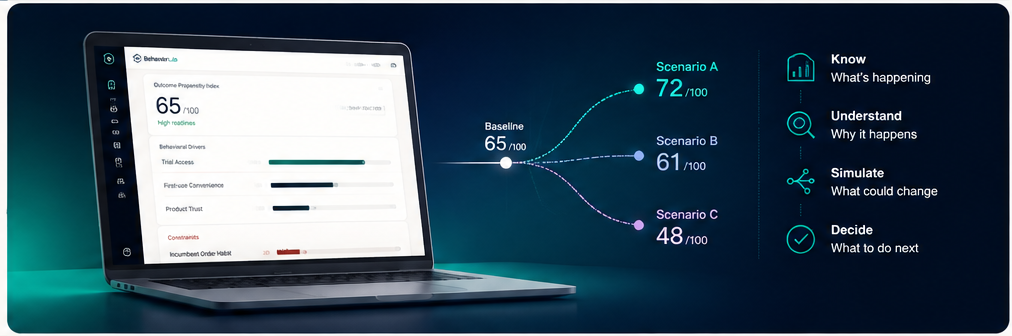
BehaviorLab scenario exploration with Know, Understand, Simulate, and Decide stages
THE PROBLEM

Your dashboard can tell you what happened.

But can it tell you what to do next?

Which customers should we focus on?
What behavior are we trying to influence?
What may be supporting or constraining that behavior?
What could we do differently?
FROM DATA TO DECISIONS

A decision journey, not two software products bundled together.

BehaviorLab connects customer understanding, behavioral intelligence, intervention exploration, and simulation to support better-informed marketing decisions.

CUSTOMER DATA→CUSTOMER UNDERSTANDING→BEHAVIORAL INTELLIGENCE→INTERVENTION→SIMULATION→DECISION
01 KNOW→02 DEFINE→03 UNDERSTAND→04 INTERVENE→05 SIMULATE→06 DECIDE
01 — KNOW · CUSTOMER INTELLIGENCE

Start with what you already know.

Use customer and transaction data to progressively build richer customer profiles, segments, behavioral patterns, risks, and opportunities.

Customer data tells us who they are and what they have been doing. But what behavior do we actually want to influence?
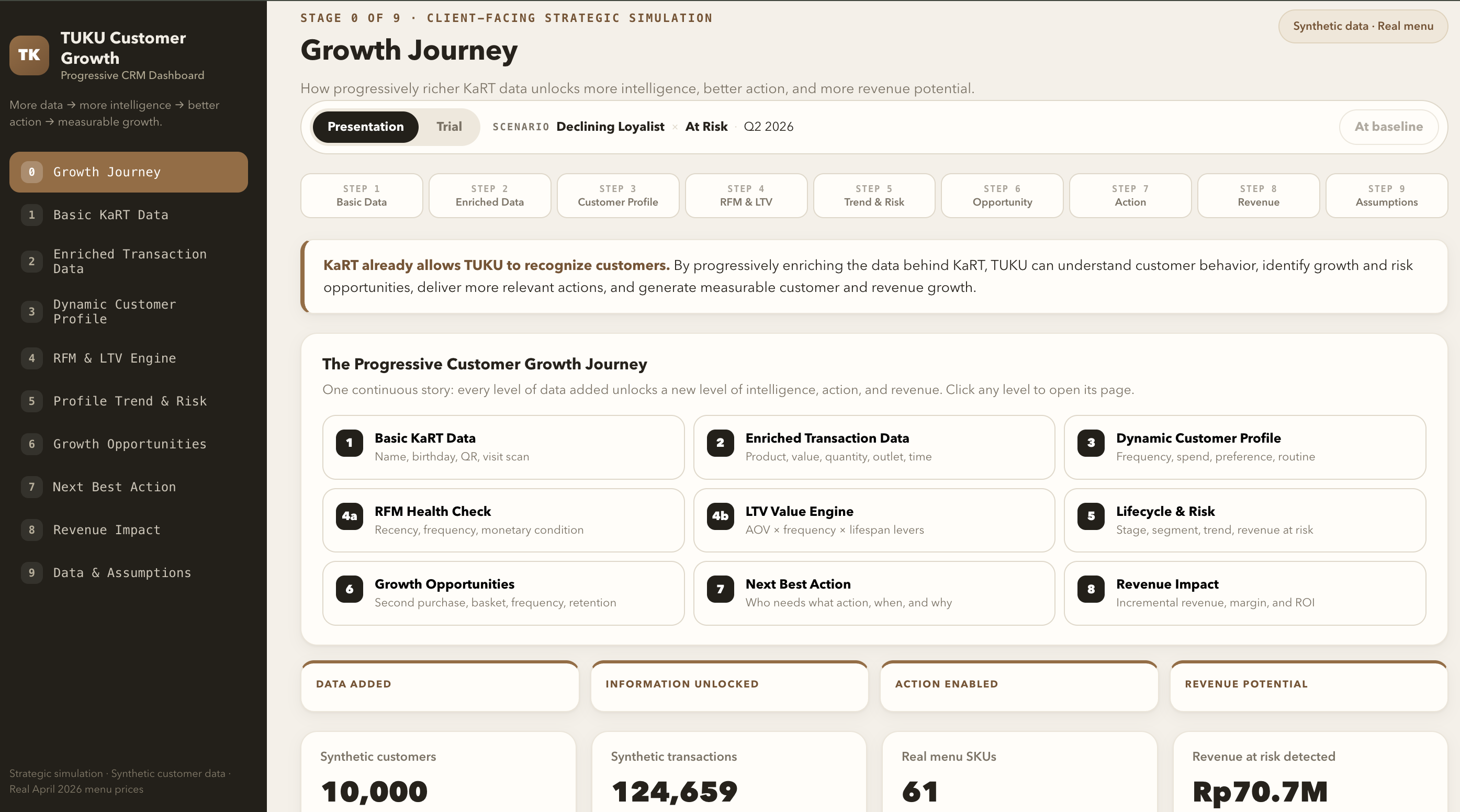
TUKU Customer Growth customer intelligence prototype

Customer Intelligence · Prototype · Synthetic customer data
02 — DEFINE

Decide what behavior matters.

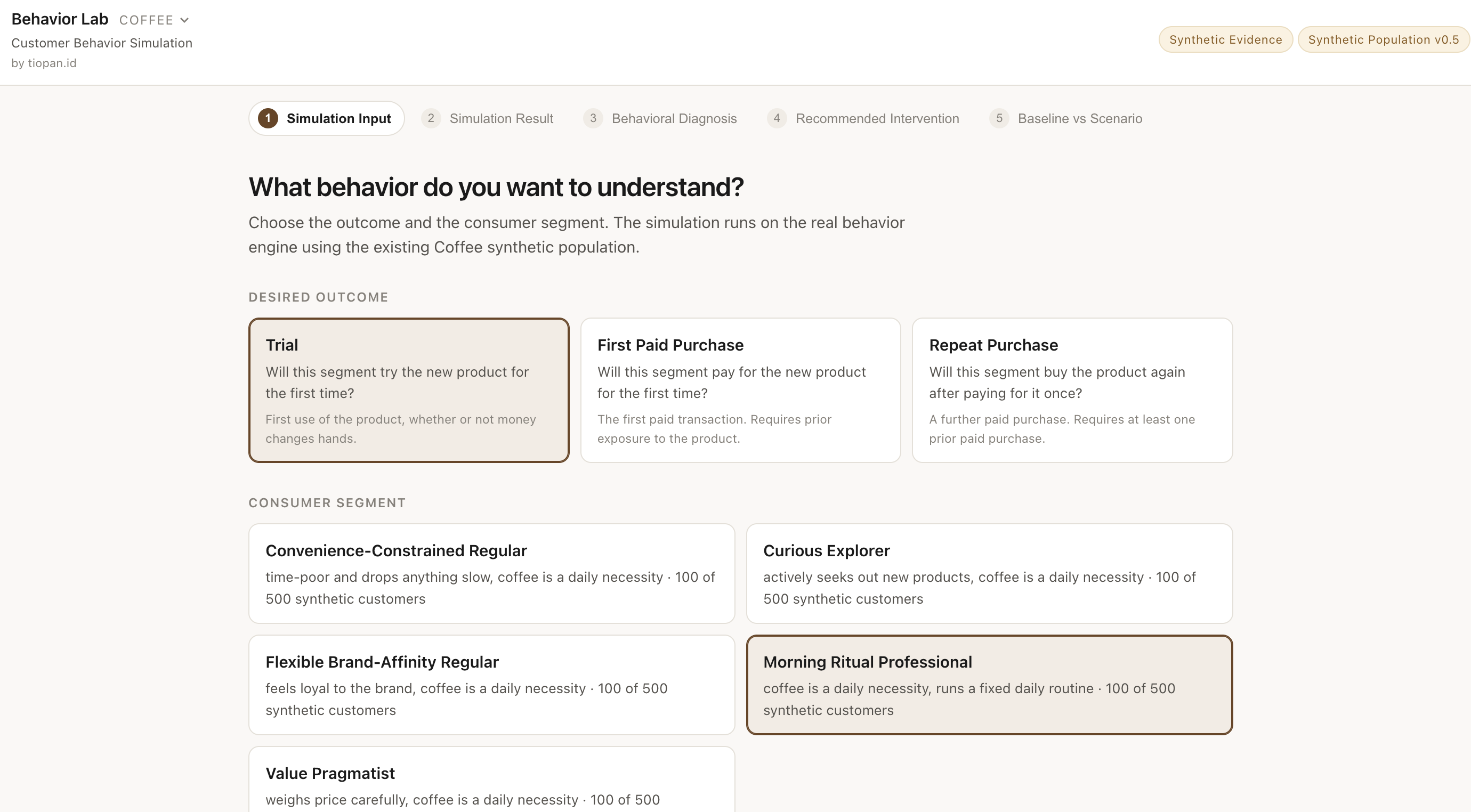
Instead of generating one generic customer score, define the specific behavior you want to understand.

TRIALFIRST PAID PURCHASEREPEAT PURCHASE

Same customer. Different objective. Potentially different behavioral dynamics.

BehaviorLab simulation input showing behavioral objectives
03 — UNDERSTAND · BEHAVIORAL INTELLIGENCE

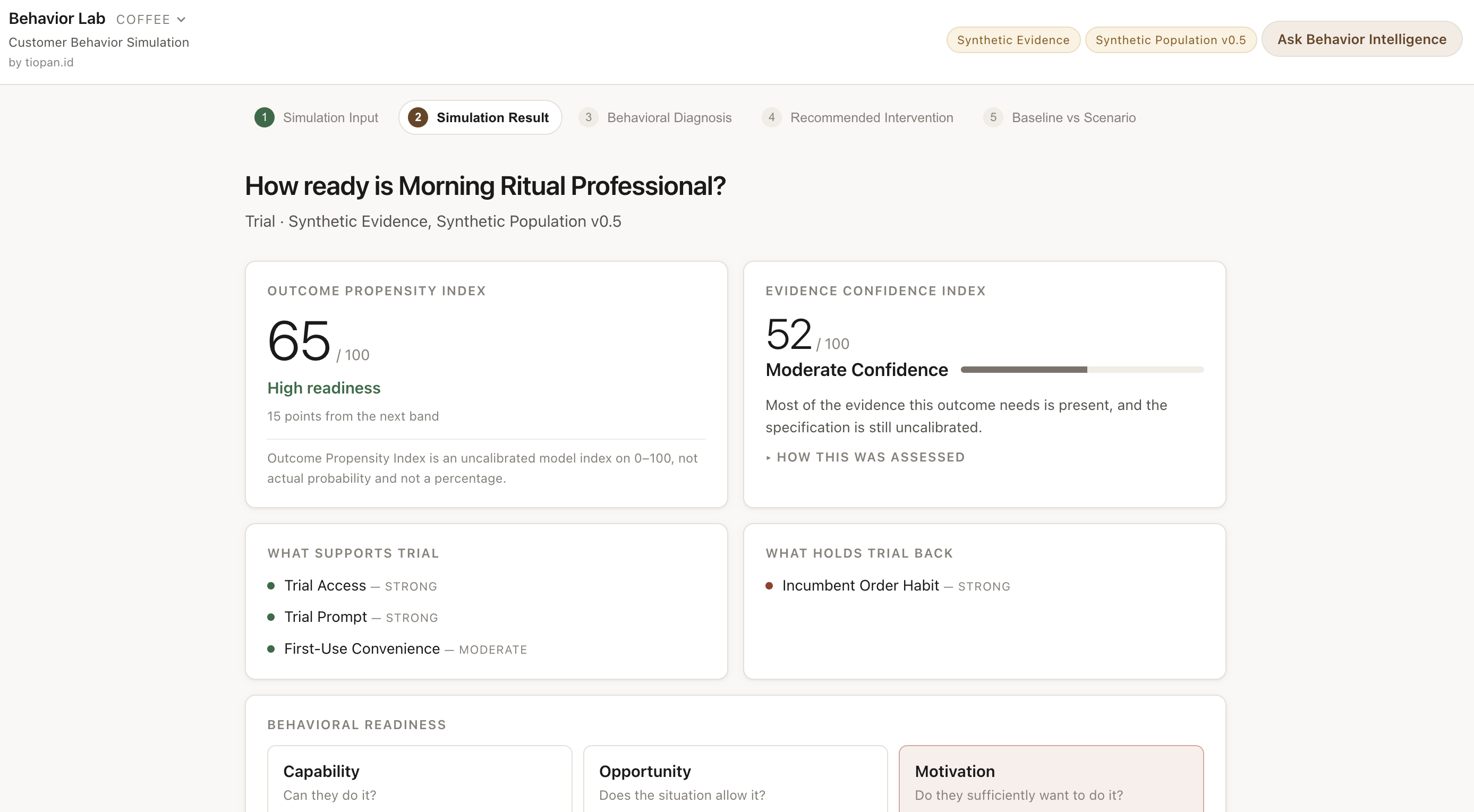
How ready are they — and why?

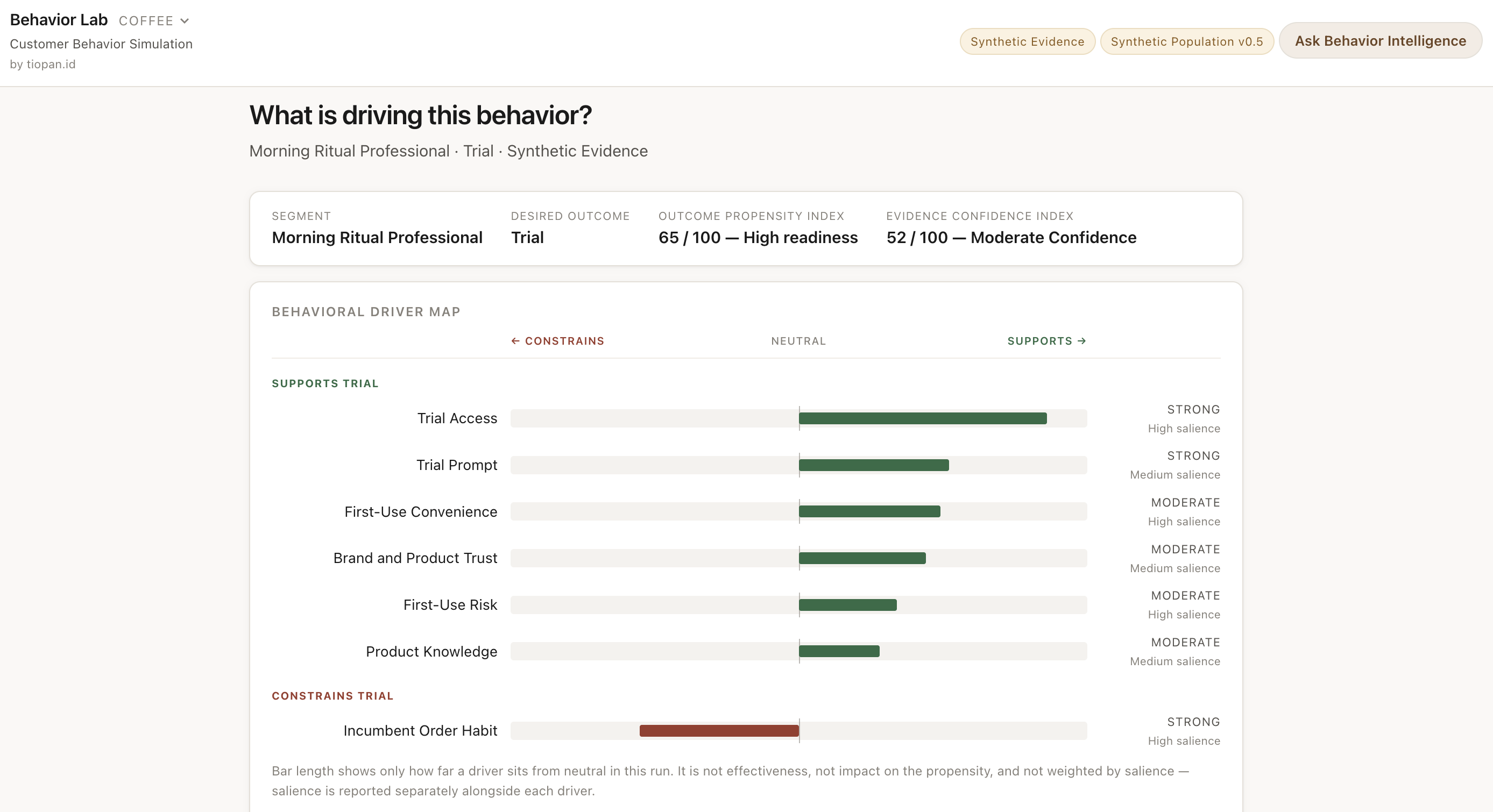
Customer profiles describe the customer. Behavioral diagnosis helps explain the behavior.

The Outcome Propensity Index is current product terminology; it is not a probability or percentage.

BehaviorLab behavioral readiness result
BEHAVIORAL READINESS
BehaviorLab behavioral driver map
BEHAVIORAL DIAGNOSIS
04 — INTERVENE

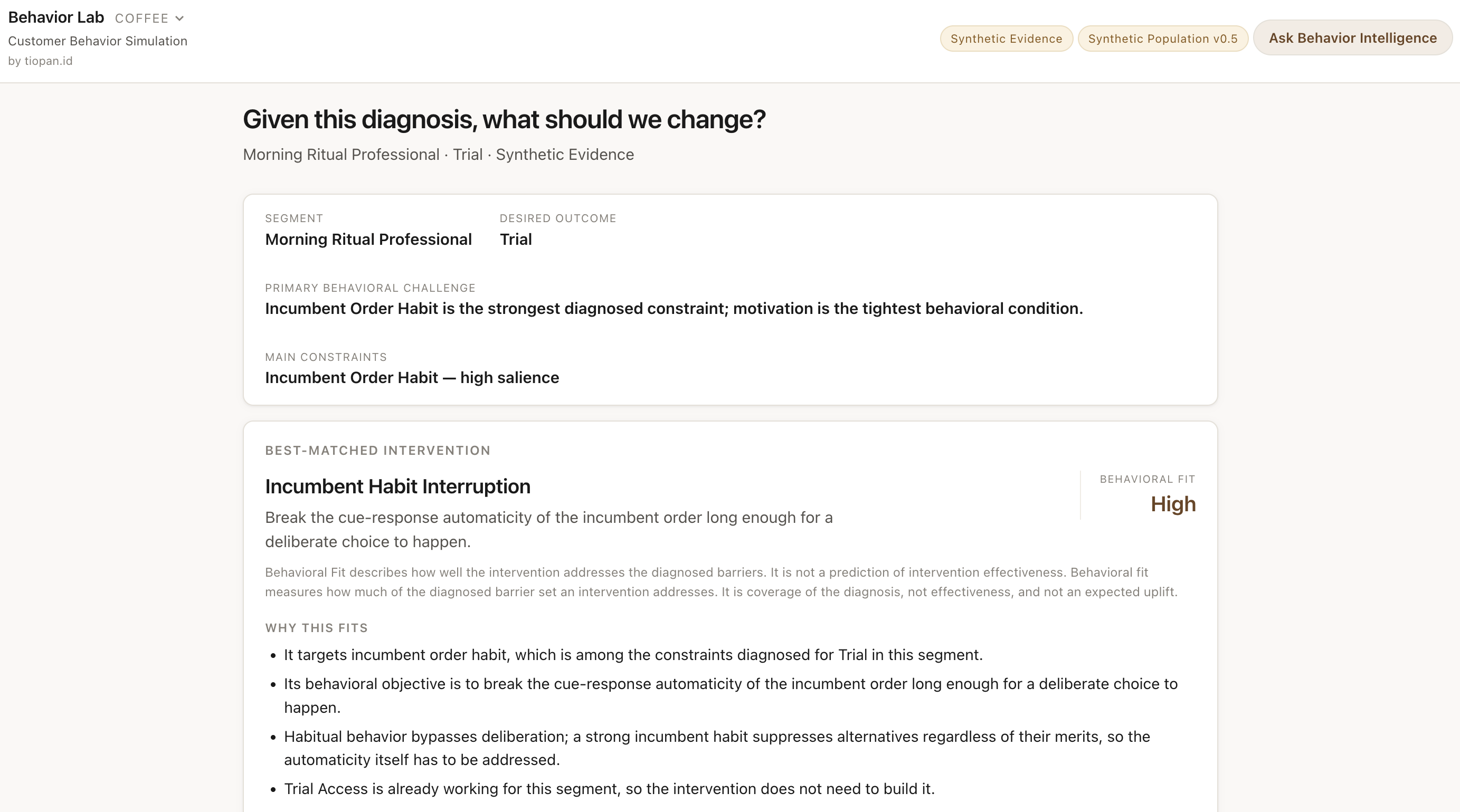
Given the diagnosis, what could we change?

Move from identifying a behavioral constraint to exploring an intervention designed to address it.

DIAGNOSED CONSTRAINTIncumbent Order Habit
BEST-MATCHED INTERVENTIONIncumbent Habit Interruption
BEHAVIORAL FITHigh

Behavioral Fit represents diagnosis coverage, not proven intervention effectiveness.

BehaviorLab recommended intervention interface
05 — SIMULATE

Before acting, explore what could change.

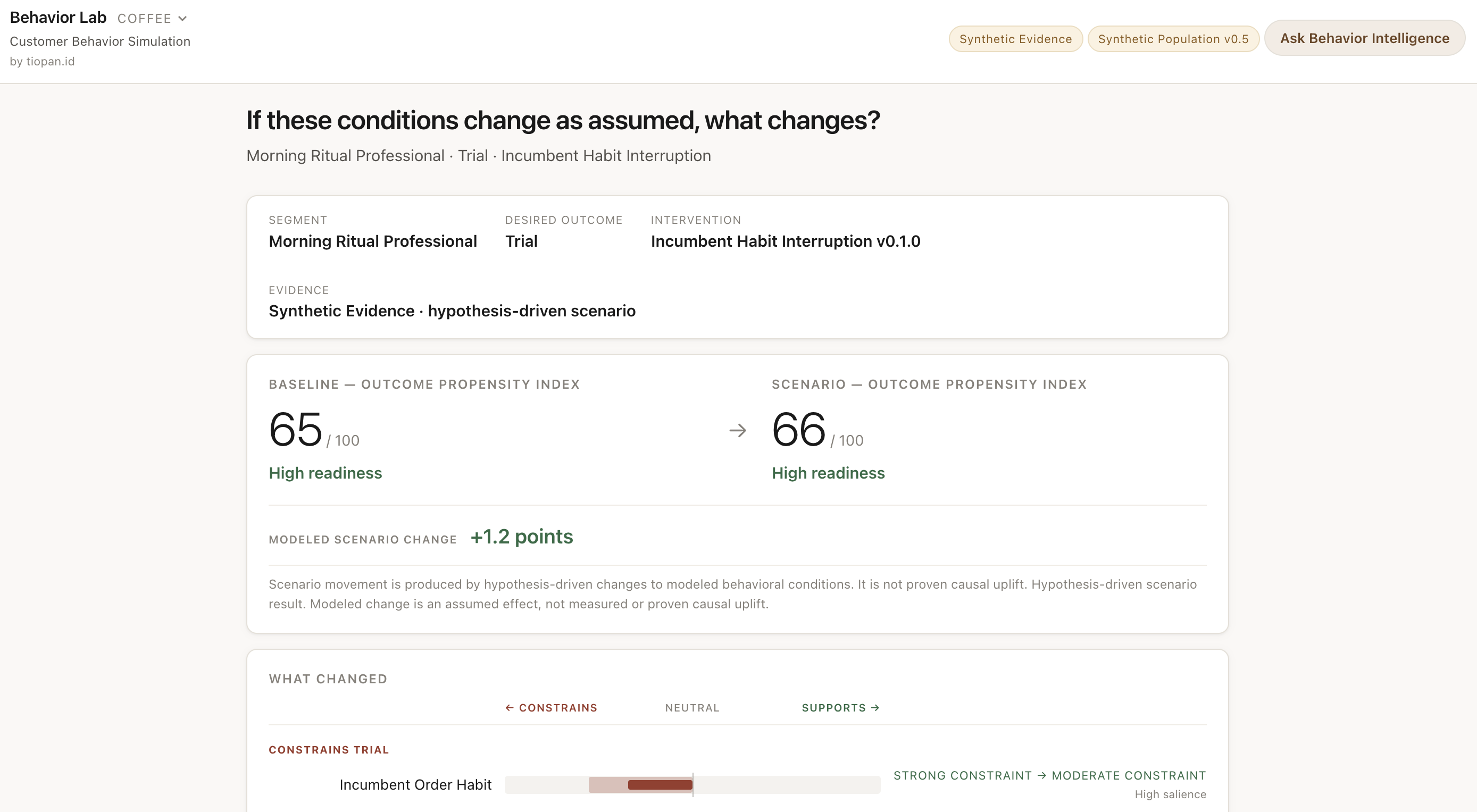
Compare the baseline with a hypothesis-driven scenario to understand what changes, what remains constrained, and whether the intervention assumption is worth further consideration.

Baseline: 65 / 100
Modeled Scenario: 66 / 100
Modeled Change: +1.2 points

Modeled scenario change is an assumed effect under explicit behavioral conditions, not proven causal uplift.

Baseline and modeled scenario comparison showing a 1.2 point modeled change
06 — DECIDE

Now the marketing conversation changes.

“What does the dashboard say?”
↓
“What should we do next — and why?”

CUSTOMER DATA→KNOW→DEFINE→UNDERSTAND→INTERVENE→SIMULATE→DECIDE→LEARN ↺

Actual customer response can improve future understanding and decisions; this is a product direction, not a claim of validated learning performance.

NEXT STEP

Don't just collect more customer data.

Make more intelligent customer decisions.

Turn what you know about your customers into better-informed decisions about what to do next.